
World Cup in the United States: A Tournament That Will Redefine Soccer's Future
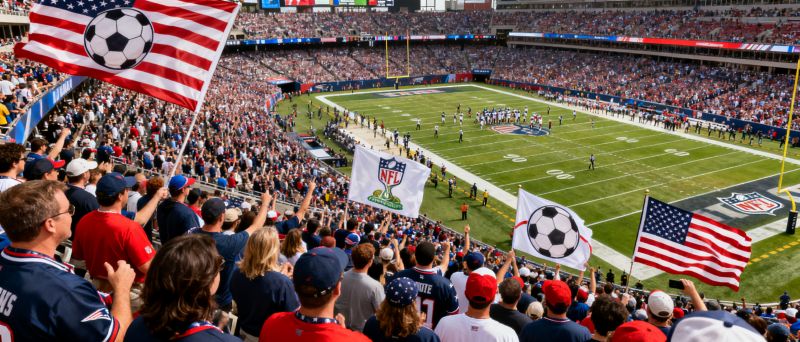
he 2026 World Cup will be the largest sporting event ever staged on American soil—48 teams, 104 matches, and a footprint stretching from Seattle to Miami. But the real story isn't the scale. It's the gamble. The United States is betting that a month-long soccer festival can finally crack the country's stubborn resistance to the global game, and the rest of the world is betting that American money and infrastructure won't smother the tournament's soul.I spent a week last summer driving through the proposed host cities in the Northeast. In Foxborough, Massachusetts, the parking lots around Gillette Stadium are already being reimagined as fan zones. Local officials told me they expect 400,000 visitors over six matches。
a number that rivals the entire population of nearby Providence. The planning is meticulous, almost obsessive. Yet what struck me was the unease among grassroots soccer organizers. "They're building this for tourists, not for us," one youth coach in Boston told me. His under-12 team practices on a patch of artificial turf that floods every spring. The World Cup will leave behind no new fields for kids like his—just upgraded highways and a hotel tax.That tension between spectacle and legacy is the defining fault line of the World Cup in the United States. FIFA projects $11 billion in revenue, driven largely by American corporate sponsors and broadcast deals. Ticket prices for the final at MetLife Stadium are already fetching thousands on resale markets. Meanwhile, the U.S. Soccer Federation has promised a "lasting grassroots legacy," but its own budget documents show that less than 10 percent of the projected surplus is earmarked for community facilities. It's a familiar pattern: mega-events enrich the top of the pyramid while the base gets a coat of paint.Still。there are reasons for cautious optimism. The 1994 World Cup, which many Europeans dismissed as a commercial sideshow, left behind a professional league—MLS—that has since grown to 30 teams and average attendance north of 20,000. The 2026 edition could do for women's soccer what 1994 did for the men's game. The U.S. women's national team, already a global powerhouse, will play group-stage matches in packed NFL stadiums. Sponsors are lining up. A generation of American girls will see soccer as a viable career, not a hobby. That's not nothing.The tournament will also test whether American cities can handle the logistics of a truly global event. Homeland Security has flagged visa processing as a bottleneck. Public transit in Los Angeles and Houston remains woefully inadequate for stadium access. And the summer heat in Dallas and Kansas City could turn afternoon matches into endurance tests. Organizers have promised shaded cooling zones and extended hydration breaks—necessary, but hardly a solution. The World Cup in the United States will be a triumph of ambition and a case study in contradictions. It will be loud, expensive, and impossible to ignore. Whether it leaves American soccer stronger or just more commercialized is a question no one can answer until the final whistle blows.
Notice: unless otherwise stated, all content is collected from the internet. If it infringes your rights, please contact us for removal.