
The Salad Paradox: Why a Bowl of Leaves Costs More Than a Burger
You pay $14 for a bowl of kale and quinoa at a downtown lunch spot, then walk past a McDonald's where a double cheeseburger costs $3. That gap isn't just economics—it's a story about what we value, how we farm, and why 'healthy' became a luxury label. I started noticing this last summer, when a neighborhood cafe charged $16 for a 'harvest salad' with three cherry tomatoes and a sprinkle of feta. The line stretched out the door. Meanwhile。the community garden two blocks away overflowed with free lettuce nobody picked.Salad has always been a shape-shifter. In ancient Rome, it was a salted herb mix—literally 'herba salata'—eaten before the main course to stimulate appetite. Medieval Europe tossed root vegetables with vinegar. The 1920s American chef who popularized the Caesar salad didn't invent it for health;he invented it to use up leftover romaine and stale bread. Somewhere along the way, salad became a moral battleground. I once watched a coworker push a wilting side salad around her plate for twenty minutes, convinced that eating it made her 'good。
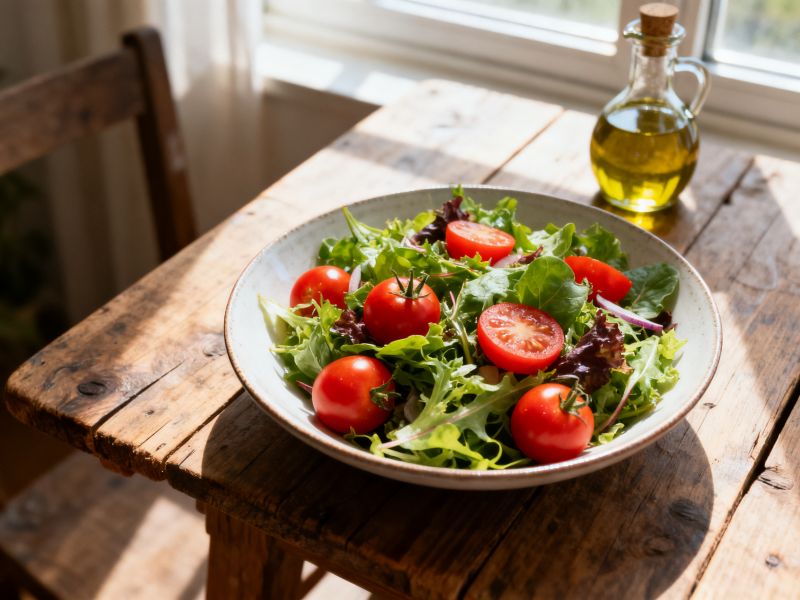
' while the pasta on my fork made me 'bad.' That's not nutrition. That's guilt with a dressing.Here's what most salad marketing hides: the carbon footprint of a plastic clamshell salad with out-of-season greens can exceed that of a local chicken sandwich. A 2022 study from the University of Michigan found that lettuce flown in from California to New York generates roughly 4.5 times more emissions per calorie than a beef burger from a regional farm. The salad bar at your office cafeteria?Those cherry tomatoes came from Mexico, the cucumbers from hothouses in Canada, the dressing from a factory in Ohio. The 'freshness' narrative falls apart under scrutiny. I'm not arguing against vegetables. I'm arguing against the sanitized version of salad that pretends agriculture isn't industrial.Authentic salad doesn't need a label. My grandmother made a 'salad' every August from tomatoes so ripe they split at the stem, torn basil, and olive oil from a neighbor's trees. No recipe, no calorie count, no $14 price tag. The best salad I've eaten in five years cost $4 at a roadside stand in Sicily: bitter greens, a squeeze of lemon, coarse salt. The woman who made it didn't call it a salad. She called it lunch. That's the distinction worth keeping. Salad as a category is fine—it's flexible。forgiving, seasonal. Salad as a brand, with its wellness claims and plastic packaging and $16 price points, has drifted far from the garden. If you want a salad that actually nourishes, skip the trend articles. Buy what's growing nearby. Use your hands. Taste as you go. The bowl doesn't care what you call it.
Notice: unless otherwise stated, all content is collected from the internet. If it infringes your rights, please contact us for removal.